
 By Robert Mutasi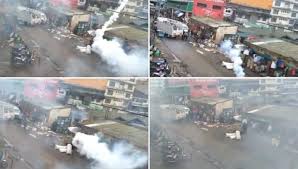
The fast-rising Eldoret is facing one of its most serious economic disruptions yet after violent demonstrations over soaring fuel prices paralysed transport, crippled businesses and exposed the fragile foundations beneath the city’s rapid urban growth.
For hours, running battles between protesters and security officers turned sections of Eldoret and its surrounding estates into chaotic scenes of smoke, blocked highways and stranded commuters.
Public transport operators, especially matatu crews angered by record fuel prices, joined demonstrations that quickly escalated into widespread unrest.
The protests disrupted activity across major estates including Huruma, Langas and Maili Nne, with demonstrators barricading roads using stones, burning tyres and makeshift obstacles.
Motorists and boda boda riders were stopped from passing through several roads leading into the city centre, causing long traffic snarl-ups and forcing hundreds of workers to walk to their destinations.
What began as anger over fuel costs soon evolved into a painful reminder of how vulnerable Eldoret’s economy remains despite its recent elevation to city status.
Investigations and interviews with traders, commuters and transport operators reveal a city whose rapid economic momentum can easily be derailed by instability and rising living costs.
Eldoret has in recent years positioned itself as one of Kenya’s fastest-growing urban centres, attracting investors in real estate, education, transport and agribusiness.
The city has increasingly become a strategic economic hub linking Kenya to Uganda, South Sudan and the wider East African region.
However, the protests exposed deep frustrations among ordinary residents struggling with the rising cost of living.
Business owners counted heavy losses after many shops remained closed for fear of looting and violence.
Transport services were severely interrupted, affecting movement of goods and passengers not only within Eldoret but also along major highways connecting neighbouring counties.
Several traders said they lost an entire day’s income as customers stayed away and delivery vehicles failed to arrive.
“We depend on daily business to survive. When transport stops, everything stops,” said a small-scale trader operating near the central business district.
Commuters were among the hardest hit.
Many residents travelling to work were forced to walk long distances after matatus disappeared from the roads.
Others turned to boda bodas, only to be charged nearly double the normal fare due to high demand and fuel costs.
The unrest also stretched security operations thin, with police officers deployed across multiple neighbourhoods to contain the protests and disperse demonstrators using tear gas.
The demonstrations in Eldoret mirrored similar scenes witnessed in Nairobi and other parts of the country as Kenya grappled with a nationwide transport crisis triggered by rising petroleum prices.
Fuel prices have surged by more than 20 percent in recent weeks, driven partly by global supply disruptions linked to tensions in the Middle East.
Kenya, like many African economies, relies heavily on imported fuel from Gulf nations.
The continued instability around the Strait of Hormuz — a key global oil shipping route — has pushed energy costs higher despite ceasefire efforts abroad.
Economic analysts warn that if such unrest continues, Eldoret risks losing investor confidence at a critical stage in its development.
As a newly established city, Eldoret is competing for investment opportunities with larger urban centres.
Persistent demonstrations, transport paralysis and insecurity could discourage businesses from expanding operations in the region.
Urban planners also warn that instability undermines efforts to modernise infrastructure, create jobs and strengthen public services.
For a city widely viewed as the economic heartbeat of the North Rift region, prolonged disruptions could have consequences far beyond Uasin Gishu County.
Eldoret’s strategic role in agriculture, logistics and regional trade means any slowdown affects farmers, suppliers, transporters and consumers across Kenya and neighbouring countries.
Residents now fear that unless urgent solutions are found to address the rising cost of fuel and living expenses, the unrest may continue — threatening to slow the remarkable transformation of a city once celebrated as Kenya’s newest symbol of urban growth and economic promise.