
 By Robert Mutasi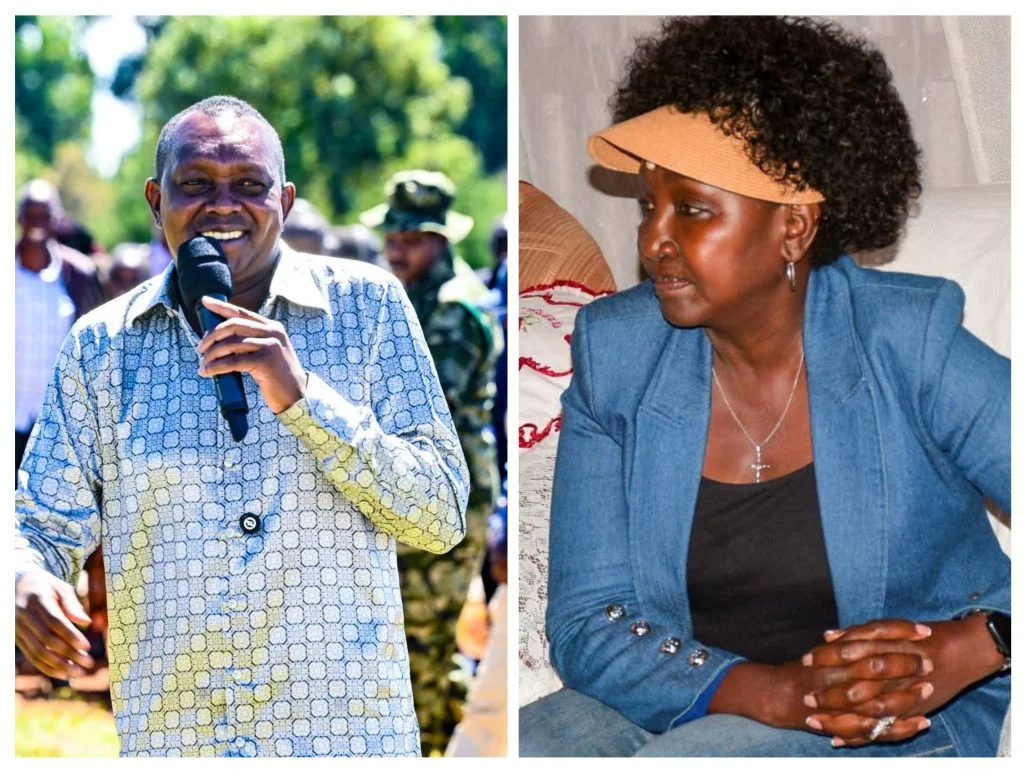
A fierce political rivalry is rapidly taking shape in Uasin Gishu County, exposing deepening divisions within the ruling political establishment and setting the stage for what could become one of the most closely watched contests ahead of the 2027 General Election.
At the center of the unfolding political storm is an emerging battle between two rival camps that have branded themselves as “Team A” and “Team B.” The contest pits allies of Governor Jonathan Bii and Kapseret MP Oscar Sudi against a faction associated with Senator Jackson Mandago and other influential political figures in the county.
What began as routine political mobilization has evolved into an open contest for influence in a region regarded as a crucial political stronghold of President William Ruto.
The latest exchanges erupted during a public function in Burnt Forest, where Governor Bii and MP Sudi launched pointed attacks against political rivals while simultaneously signaling their preferred candidates for key elective positions.
Speaking during the homecoming ceremony for Akorino Church Archbishop Paul Gathuo, Sudi urged residents to reject Uasin Gishu Woman Representative Gladys Shollei in the next election cycle, accusing her of failing to work closely with fellow elected leaders.
“I was not elected to work for every other leader, including those who don’t even appear at public events. That is why people like our Woman Rep Shollei should not be re-elected,” Sudi told supporters.
The remarks were accompanied by the introduction of individuals interested in challenging Shollei for her seat, an action that political observers interpreted as an early campaign strategy designed to reshape the county’s political leadership.
Governor Bii, meanwhile, intensified the debate by publicly endorsing lawyer Isaac Terer as a potential successor to Senator Mandago. He also accused some elected leaders of refusing to acknowledge his authority as governor, warning that political accountability would come at the ballot box.
The endorsements have triggered questions about the growing influence of political kingmakers within the county and whether early succession politics could distract leaders from governance and service delivery.
However, Senator Mandago quickly dismissed the endorsements, insisting that voters, not politicians, determine who occupies public office.
“It is the people who will decide during elections. There is nothing like endorsing someone into office,” Mandago said.
His remarks highlight a broader debate unfolding within Uasin Gishu politics over whether powerful political figures are attempting to shape electoral outcomes long before formal campaigns begin.
Shollei also fired back at her critics, rejecting suggestions that her political future depends on approval from fellow leaders. She argued that her mandate comes directly from voters and accused Governor Bii of interfering in her political activities.
The escalating confrontation points to deeper fractures within local political networks that once appeared united under the broader United Democratic Alliance (UDA) movement.
Further complicating the political landscape is the entry of additional contenders eyeing top county positions. Allies of Mandago have rallied behind Principal Secretary Julius Bitok, who has openly expressed interest in the governorship. Businessman Bundotich Kiprop, popularly known as Buzeki, is also expected to join the race, creating the prospect of a crowded and highly competitive contest.
Political analysts say the early maneuvering reflects a struggle for control of Uasin Gishu’s political future and access to one of the country’s most influential voting blocs.
Beyond the public exchanges lies a larger question. As leaders trade accusations and endorsements, voters may increasingly focus on performance records, development projects, and accountability rather than political alliances.
With UDA primaries expected to attract intense competition, the emerging Team A and Team B divide is likely to shape political conversations across the county for months to come.
For now, the battle lines have been drawn. What remains uncertain is whether the rivalry will strengthen democratic competition or deepen divisions within a county that has long played a central role in Kenya’s national politics.
As the countdown to 2027 continues, Uasin Gishu is already offering a glimpse into the political battles that could define the next electoral cycle.