
 By Robert Mutasi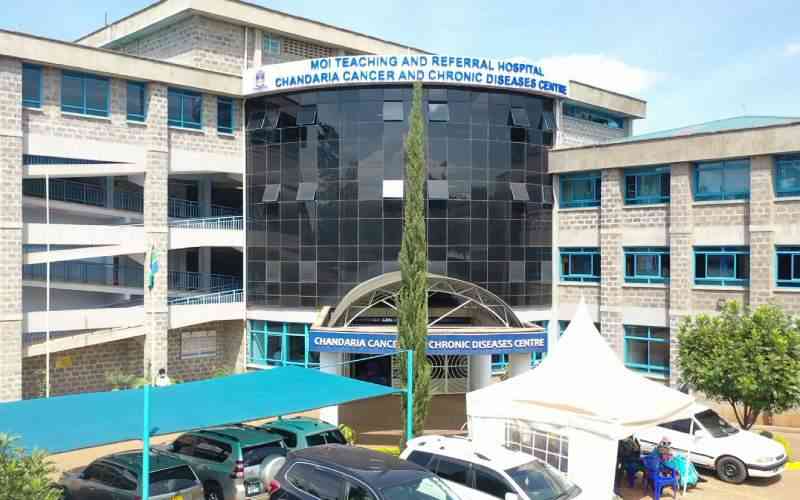
Kenya has activated a network of 23 hospitals designated to isolate and manage Ebola cases following confirmation of the country’s first imported case of the disease.
Among the facilities identified by the Ministry of Health is Moi Teaching and Referral Hospital (MTRH) in Eldoret, which has been placed among the key centres supporting the national Ebola response.
The development comes after Health Cabinet Secretary Aden Duale confirmed on Tuesday, October 6, 2026, that Kenya had recorded its first Ebola case involving a Kenyan citizen who had been living in the Democratic Republic of Congo (DRC) for seven years.
The patient became ill while in the DRC, travelled by road to Kampala, Uganda, and later flew to Nairobi. He subsequently died after developing symptoms associated with the disease.
According to details released by The Kenya Times, MTRH has an isolation capacity of 20 beds, with another 30 beds available as surge capacity if the number of suspected or confirmed cases increases.
The Eldoret facility is strategically important because of its role as a major referral hospital serving the wider North Rift and neighbouring regions. MTRH says it serves patients from Kenya as well as parts of eastern Uganda, South Sudan, northern Tanzania and the DRC, giving the hospital a significant role in managing diseases that can cross borders.
The hospital is among facilities being relied upon as Kenya strengthens its ability to detect, isolate and treat patients suspected of having Ebola.
Other national treatment and isolation facilities include Kenyatta National Hospital in Nairobi, which has an eight-bed isolation and treatment unit, and Kenya National Police Hospital, which has 49 beds available for activation as surge isolation capacity. KUTRRH in Kiambu, Alupe Hospital in Busia and other facilities have also been included in the national preparedness plan.
The government has also identified isolation sites in counties considered important for border surveillance and emergency response. Garissa County Referral Hospital, for instance, has a 20-bed unit for confirmed cases and a separate 10-bed unit for suspected cases. Facilities in Trans Nzoia and Turkana have also been identified for further assessment.
MTRH’s location in Eldoret places it within an important transport and healthcare corridor connecting western Kenya with Uganda and other parts of the region.
The Ministry of Health had already intensified surveillance at major points of entry before Kenya confirmed the imported case. In June, Public Health Principal Secretary Mary Muthoni visited Eldoret International Airport to assess passenger screening, emergency response procedures and infection prevention measures amid concerns over Ebola cases in the region.
The government had also stepped up preparedness at the Malaba border, where health officials strengthened surveillance and screening following Ebola cases reported in Uganda earlier in the year.
The latest response therefore places hospitals such as MTRH at the centre of Kenya’s efforts to prevent further transmission.
Health authorities have also begun contact tracing after the imported case was confirmed. Reuters reported that eight family members and 21 healthcare workers were quarantined, while authorities were tracing passengers linked to the patient’s journey. The World Health Organisation and Africa Centres for Disease Control and Prevention are supporting Kenya’s response.
Ebola spreads through direct contact with the blood or other bodily fluids of an infected person or someone who has died from the disease. Symptoms can include fever, vomiting and diarrhoea, with severe cases potentially developing bleeding.
With MTRH among the designated isolation centres, Eldoret has become an important part of the national response as Kenya works to contain the imported case and prevent further transmission.