
 By Robert Mutasi
Uasin Gishu County has called for stronger collaboration with the International Fund for Agricultural Development (IFAD) to help farmers cope with changing weather patterns following significant maize losses caused by prolonged dry spells.
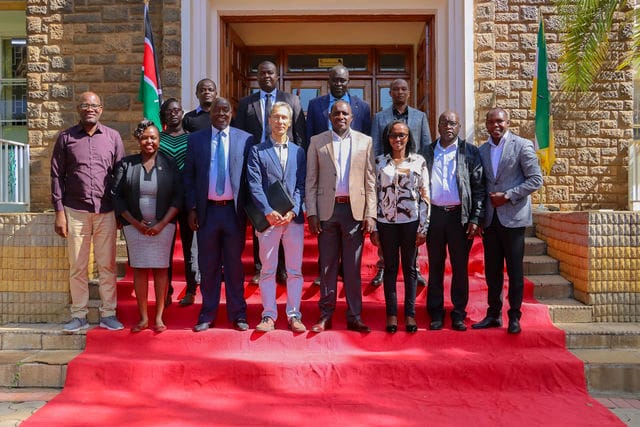
Deputy Governor Evans Kapkea made the appeal on Thursday when he hosted an IFAD delegation led by its Director, Matteo Marchisio, at his office in Eldoret.
Kapkea said unpredictable rainfall had disrupted the traditional farming calendar across the North Rift region, leaving thousands of acres of maize with poorly developed or empty cobs despite initially promising crop growth.
Reports from the region indicate that some farming areas have recorded crop losses of up to 60 per cent, raising concerns about food security and threatening the livelihoods of households that depend on agriculture.
He described agriculture as the backbone of Uasin Gishu’s economy and a major contributor to Kenya’s food production, noting that the county requires stronger partnerships to address the growing challenges facing farmers.
The Deputy Governor welcomed IFAD’s continued engagement in Kenya and pledged the county government’s support for development programmes aimed at improving agricultural productivity and strengthening climate resilience.
He particularly highlighted the Integrated Natural Resource Management Programme (INREMP), which is hosted in Eldoret, promising full county support for its successful implementation.
County Secretary Philip Melly also called for closer coordination between national and county governments, saying partnerships with development agencies were essential in achieving shared development priorities.
Melly reaffirmed the county’s commitment to working with IFAD and other development partners to ensure effective implementation of agricultural and natural resource management programmes.
On his part, Marchisio welcomed the engagement, noting the importance of understanding ongoing initiatives and strengthening cooperation with county governments to advance sustainable development.
He acknowledged Uasin Gishu’s contribution to agricultural development and the implementation of INREMP, reaffirming IFAD’s commitment to supporting interventions that improve livelihoods and strengthen community resilience.
During the meeting, the county and IFAD delegation identified several priority areas for intervention, including promoting climate-smart agriculture, expanding access to drought-tolerant and early-maturing seed varieties, and encouraging farmers to diversify beyond maize production.
The proposed diversification options include high-value crops such as coffee, avocado and macadamia, which could provide farmers with alternative sources of income.
The meeting also highlighted the need to improve water management through small-scale irrigation projects, rehabilitation of dams and protection of water catchment areas to help farmers cope with unreliable rainfall.
Other proposed interventions include improving soil health, promoting agroforestry, strengthening agricultural extension services and expanding access to reliable climate information.
The county further emphasised the importance of post-harvest management, value-chain development and targeted support for women and young farmers to protect household incomes against climate-related shocks.
The meeting was attended by County Executive Committee Member for Education and Culture Eng. Lucy Ng’endo, Chief Officer for Agriculture Eng. Abraham Kiptalam, National INREMP Director Leonard Kubok, County INREMP Director Nathan Koech and other county officials.
The engagement comes as changing rainfall patterns continue to threaten agricultural production in Uasin Gishu, one of Kenya’s leading maize-producing counties, highlighting the need for long-term investments in climate-resilient farming.
 Eldoret Leo
 EldoretLeo