
 By Baraka Simba
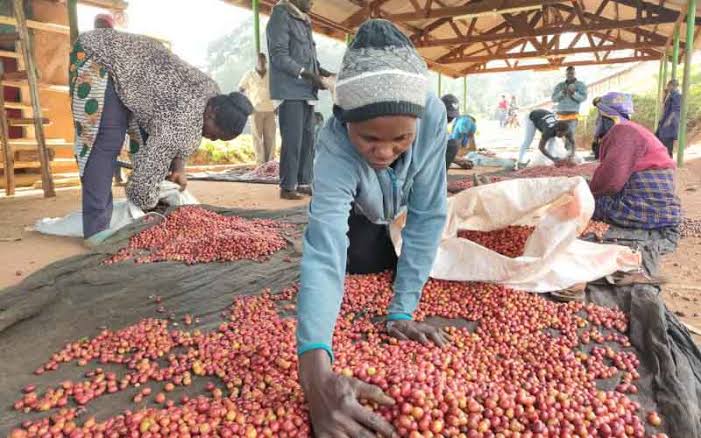
Uasin Gishu County is stepping up efforts to transform its agricultural sector by promoting coffee farming and pursuing potential export opportunities in South Korea, in a move aimed at improving farmers’ incomes and reducing dependence on traditional cereal production.
Governor Jonathan Bii Chelilim is seeking to establish partnerships with South Korean investors to create an international market for coffee produced in the county, positioning the crop as a promising alternative to maize and wheat farming.
Follow our WHATSAPP CHANNEL for daily updates.
The initiative gained momentum on Monday, November 23, 2026, when the governor hosted a delegation from South Korea at the county headquarters in Eldoret.
During the meeting, Bii said the county was determined to encourage farmers to embrace high-value agricultural crops capable of generating better returns.
The proposed partnership could allow South Korean buyers to source coffee directly from Uasin Gishu, opening new opportunities for local farmers and strengthening the county’s agricultural economy.
The development marks another step in the county administration’s efforts to establish coffee as a major commercial crop across the North Rift region.
The county has identified all six sub-counties — Ainabkoi, Kapseret, Kesses, Moiben, Soy and Turbo — as suitable areas for expanding coffee production.
County Coffee Development Officer Nicholas Maritim said the region enjoys favourable climatic and soil conditions that can support Arabica coffee farming.
Uasin Gishu receives between 900mm and 1,200mm of rainfall annually, while temperatures range from 8.4 to 26 degrees Celsius. Its altitude, which ranges between 800 and 2,700 metres above sea level, also provides suitable conditions for coffee cultivation.
According to county officials, approximately 1,686 hectares are currently under coffee cultivation.
The county is promoting several Arabica varieties, including Ruiru 11, Batian, SL28, SL34 and K7.
To accelerate adoption, the county government has distributed more than 2.5 million coffee seedlings over the past three years while strengthening agricultural extension services to equip farmers with modern production techniques.
Despite the expansion efforts, the county faces challenges in maximising coffee productivity, particularly among smallholder farmers.
Maritim indicated that smallholder farmers currently produce an average of 769 kilogrammes per hectare, compared with 3,964 kilogrammes per hectare among estate farmers.
The potential yield stands at approximately 6,428 kilogrammes per hectare, suggesting significant room for improvement through better farm management, training and investment.
The county hopes that access to reliable international markets will encourage more farmers to invest in coffee production.
The South Korean delegation expressed interest in sourcing Kenyan coffee, citing the country’s established coffee consumption culture and appreciation of premium Kenyan beans.
Sera Park, a representative of the South Korean delegation and an officer of Nowon-gu in Seoul, said Kenyan coffee had performed well in coffee festivals and competitions hosted in her country.
She indicated that Uasin Gishu could benefit from the growing recognition of Kenyan coffee among South Korean consumers.
The proposed arrangement could provide farmers with access to international buyers and reduce their dependence on traditional marketing channels.
Bii also pointed to Eldoret International Airport, the railway network and the county’s road infrastructure as strategic advantages that could facilitate the transportation of coffee to domestic and international markets.
However, the county still faces a major infrastructure gap, as it does not have a coffee milling plant.
The governor said plans were underway to establish a milling facility that would support value addition, improve quality management and strengthen farmers’ bargaining power.
Uasin Gishu’s agricultural transformation comes as farmers increasingly reconsider maize and wheat production amid rising farming costs, unpredictable weather patterns and unstable market prices.
The county’s shift towards cash crops has, however, raised concerns about the long-term implications for Kenya’s food security.
Uasin Gishu is traditionally recognised as one of the country’s leading maize-producing regions and plays an important role in supplying staple food to the national market.
The growing preference for commercial crops such as coffee could reduce the land available for food production if diversification is not carefully managed.
The county therefore faces the challenge of balancing improved household incomes with its responsibility as part of Kenya’s traditional food basket.
The coffee initiative also comes amid national efforts to revive the country’s coffee industry and increase production through improved seedlings, farmer support and stronger market access.
For Uasin Gishu, securing the proposed South Korean market, improving production and investing in processing facilities could determine whether its coffee ambitions translate into sustainable economic benefits for farmers.
 Robert Mutasi