
 By Robert Mutasi
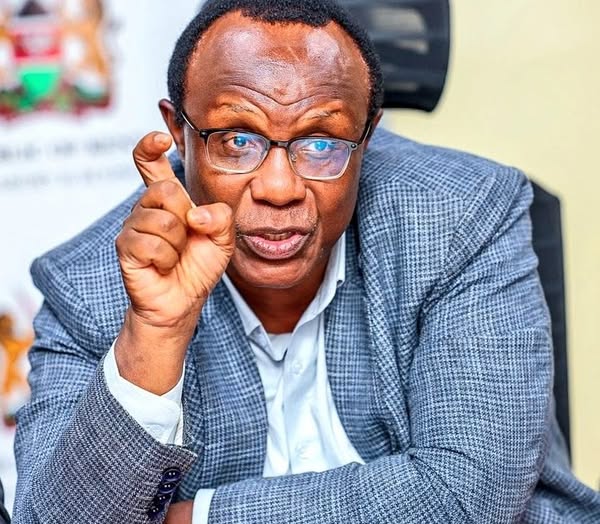
President William Ruto’s economic adviser David Ndii has sparked renewed debate over the cost of government affordable housing after responding to concerns that public housing units are more expensive than similar apartments developed by private investors.
Ndii addressed the concerns after a Kenyan questioned why a two-bedroom apartment under the government’s Affordable Housing Programme costs KSh3.6 million, compared to KSh3 million for a similar unit at Greatwall Apartments in Mlolongo.
Follow our WHATSAPP CHANNEL for daily updates.
The issue was raised on Thursday, November 19, 2026, by an X user identified as @Kamugenius, who challenged the government to explain the KSh600,000 price difference.
The user argued that government housing should be cheaper because the projects benefit from public land and taxpayers’ contributions, unlike private developments, which are established primarily for commercial profit.
“Explain to us how housing built on free government land using our taxes cost more than housing built for profit by private investors,” the user questioned.
Responding to the concerns, Ndii offered a brief explanation, pointing to the location of the two developments.
“Location, location, location,” he replied.
His response suggested that geographical positioning could account for differences in property prices, with factors such as accessibility, infrastructure, proximity to employment centres and availability of social amenities influencing the value of residential developments.
However, Ndii did not provide a detailed comparison of the construction costs, land values or other expenses associated with the two projects.
The debate comes weeks after the government announced an increase in the prices of houses under the Affordable Housing Programme.
The revised prices, which took effect on October 1, 2026, saw affordable housing units increase by 20 per cent, while market-rate units went up by 10 per cent.
Under the new pricing structure, two-bedroom affordable housing units rose from KSh3 million to KSh3.6 million, adding KSh600,000 to the previous purchase price.
The State Department for Housing said the new rates would apply to applications submitted from October 1, 2026. However, Kenyans who had registered before the deadline would retain the earlier prices.
The adjustment has attracted attention because the new government price is higher than the KSh3 million reportedly charged for a comparable two-bedroom apartment at Greatwall Apartments in Mlolongo.
The government has previously defended its housing programme, arguing that the use of public land and bulk procurement of construction materials helps reduce the overall cost of developing residential units.
Affordable Housing Board acting Chief Executive Officer Sheila Waweru previously explained that government projects are constructed on national or county government land, which is treated as zero-rated for the programme.
She also said the government had standardised construction costs per square metre across its housing projects to ensure consistency in the cost of delivering different categories of houses.
According to Waweru, the government negotiates with major manufacturers of construction materials, including cement and steel producers, to secure favourable prices for contractors.
These arrangements are intended to lower construction expenses through bulk purchasing and standardised building designs.
Nevertheless, the final selling price of a housing unit can also be influenced by other considerations, including infrastructure, project location and the cost of providing essential services.
The Affordable Housing Programme is funded through the Affordable Housing Fund, which receives contributions from the housing levy and other sources provided for under the law.
The Affordable Housing Act, 2024, provides a framework for affordable housing, with affordability linked to housing costs that should not exceed 30 per cent of an individual’s monthly income.
The programme provides different housing categories, including social housing for lower-income households, affordable housing and market-rate units.
This means that government housing prices vary depending on the project, house type and category.
Some Boma Yangu project listings have also displayed two-bedroom affordable housing units at prices different from the newly revised KSh3.6 million rate.
The latest exchange involving Ndii has therefore renewed scrutiny of how the government determines housing prices and whether the benefits of using public land and negotiating construction costs are adequately reflected in the final selling prices.
Although location remains an important factor in determining property values, Kenyans are likely to demand more detailed explanations of the cost differences between government-backed housing projects and privately developed apartments.
The debate also raises questions about whether the Affordable Housing Programme is delivering homes at prices that ordinary Kenyans can comfortably afford.
 Baraka Simba