
 By Robert Mutasi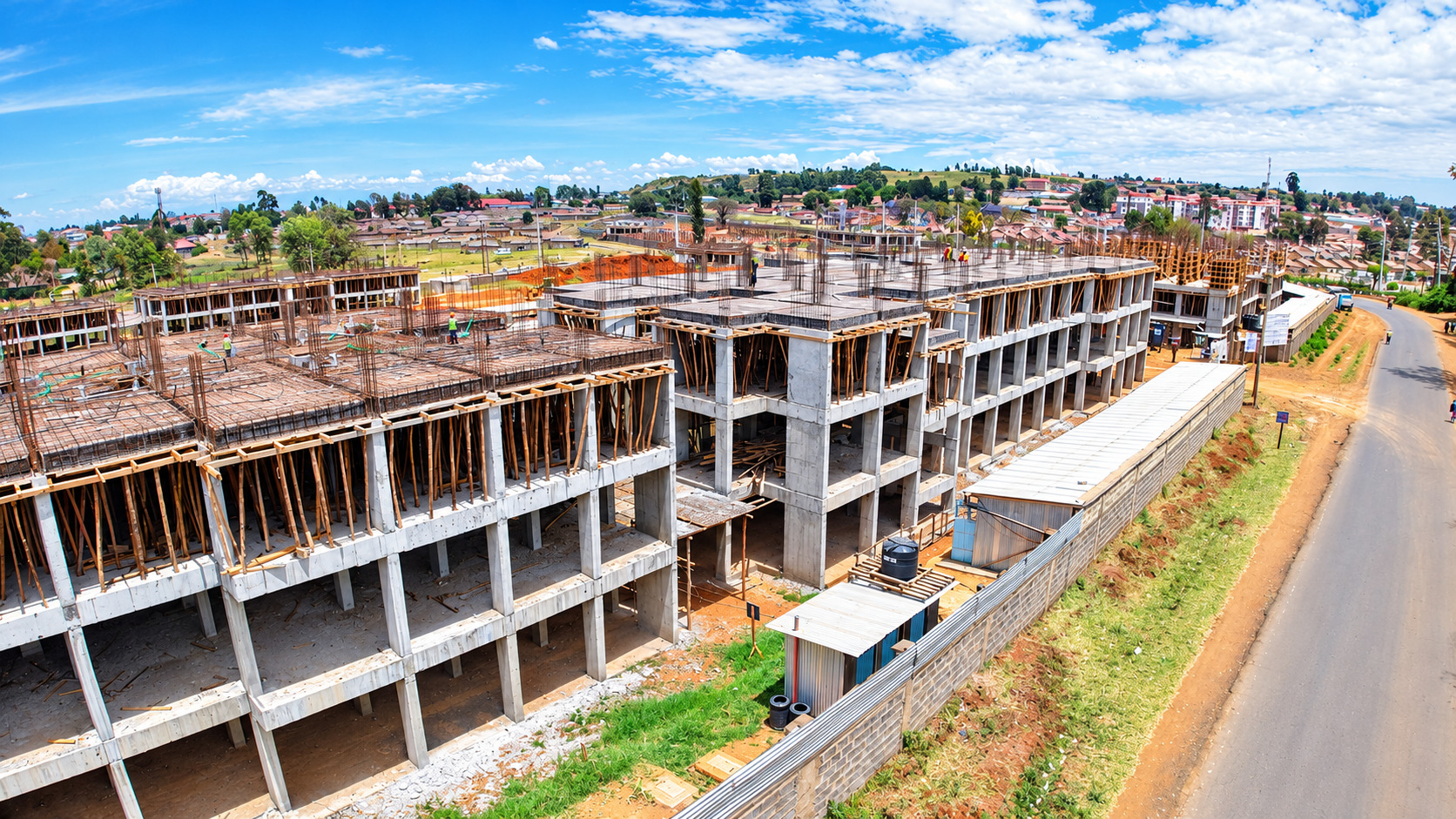
The Principal Secretary for the State Department for Internal Security and National Administration, Dr. Raymond Omollo, has reaffirmed the government’s commitment to secure and orderly urban development as construction of the Kidiwa Affordable Housing Project – Phase 2 continues in Eldoret City.
The project, located in Soy Constituency on a 16-acre parcel, is replacing the old Low-Cost (LC) houses built by the Eldoret Municipal Council in 1974, which can no longer meet the needs of the city’s rapidly growing population.
Speaking during an assessment of the project, PS Omollo noted that building on the success of Phase 1, the development marks another critical step in Eldoret’s urban transformation following its elevation to city status.
The second phase comprises 15 residential blocks rising 14 storeys high, with a total of 2,148 housing units. The units are divided as follows: 552 social housing units, 1,056 affordable housing units, and 540 market-rate apartments.
Once complete, the modern estate will feature integrated amenities designed to promote community well-being and a dignified living environment. Planned facilities include basketball courts, a swimming pool, a clubhouse, a community centre, an Early Childhood Development (ECD) centre, and ample parking space.
PS Omollo emphasized that the State Department for Internal Security and National Administration continues to work closely with local administration, including chiefs and assistant chiefs, and host communities to support safety and orderly development within the residential estate and across the rapidly expanding Eldoret City.
“This project is not just about housing; it is about urban planning, security, and economic growth. We are ensuring that as Eldoret grows, it grows in an orderly, safe and inclusive manner that creates a secure environment for residents, businesses and investment,” said Dr. Omollo.
The Kidiwa project is part of the Government’s Affordable Housing Programme under the Bottom-Up Economic Transformation Agenda (BETA), which seeks to address the housing deficit while creating jobs and stimulating local economies.