
 By Robert Mutasi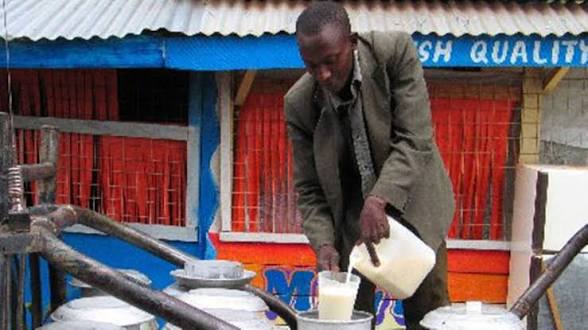
The government’s newly announced crackdown on raw milk hawking is sending shockwaves through the dairy economy of Uasin Gishu County, where thousands of families depend on informal milk trade for survival.
While Agriculture Cabinet Secretary Mutahi Kagwe insists the reforms are necessary to protect consumers from contaminated milk, investigations across Eldoret and surrounding rural areas reveal growing anxiety among milk hawkers, dairy keepers and small-scale farmers who fear they could lose their livelihoods overnight.
Speaking during the launch of 25 milk cooling machines at Uhuru Park, Kagwe declared that raw milk hawking “must stop” because it threatens public health and weakens the formal dairy sector.
The government argues that unregulated milk sales expose consumers to dangerous diseases such as diarrhea, typhoid and bacterial infections because much of the milk sold door-to-door cannot be traced to certified farms or tested collection centres.
But in Uasin Gishu — one of Kenya’s leading milk-producing counties — the planned restrictions are exposing a painful economic reality.
Hawkers Fear Sudden Loss of Income
In estates around Eldoret town, raw milk hawkers form a critical supply chain between farmers and consumers.
Every morning, motorcycle riders and small traders ferry hundreds of litres from villages such as Kapseret, Turbo, Moiben and Ainabkoi to urban households that prefer cheaper raw milk over packaged brands.Many hawkers say the business is their only source of income.
Several traders interviewed expressed fears that aggressive enforcement could push them out of work without offering alternative employment or affordable licensing systems.
For years, informal milk vendors have thrived because many low-income families cannot afford processed milk sold in supermarkets.
A litre of raw milk in Eldoret estates often costs significantly less than packaged alternatives, making it attractive to struggling households battling the high cost of living.
If the crackdown intensifies, analysts warn that thousands of hawkers in Uasin Gishu could face arrests, confiscation of milk containers and declining incomes.
“This sector feeds many families indirectly,” said a dairy stakeholder in Eldoret. “When hawkers are removed abruptly, boda boda riders, loaders, milk transporters and even small tea kiosks also suffer.”
Dairy Farmers Could Also Be Hit
The restrictions may also create unintended consequences for dairy keepers across Uasin Gishu’s rural areas.
Small-scale farmers often rely on hawkers because they provide immediate cash payments and collect milk directly from farms.
Formal processors and cooperatives, on the other hand, are frequently accused of delayed payments, strict quality requirements and fluctuating buying prices.
Some farmers fear that without hawkers, they may be forced to sell milk at lower prices to cooperatives or risk watching excess milk spoil during peak production seasons.
The government says it is distributing 230 milk coolers worth Ksh1.43 billion nationwide to reduce spoilage and improve organized milk collection systems.
However, dairy farmers in Uasin Gishu argue that infrastructure alone may not solve long-standing frustrations in the dairy value chain.
In many remote villages, collection centres remain far apart, transport costs are high and electricity interruptions continue to affect milk preservation.
Farmers are also questioning whether existing cooperatives have enough capacity to absorb milk currently handled by informal traders.
Health Concerns Remain Real
Despite resistance from traders, public health experts insist regulation is necessary.
Cases of milk adulteration, poor hygiene during transportation and contamination from unclean containers have occasionally been reported in informal markets.
Health officers warn that without testing and traceability systems, consumers remain vulnerable.
Children are considered most at risk because contaminated milk can spread dangerous infections quickly.
The government believes formalizing the sector could eventually stabilize prices, improve milk quality and strengthen Kenya’s competitiveness in international dairy markets.
Possible Solutions for Uasin Gishu
The solution may not lie in banning hawkers completely, but in gradually integrating them into regulated systems.
One proposal is to introduce affordable licensing and training programs for milk hawkers instead of criminalizing the trade immediately. Traders could be trained on hygiene, safe handling and milk transportation standards.
County governments could also establish satellite milk testing centres closer to rural farmers to reduce transport burdens.
Another solution would involve ensuring dairy cooperatives pay farmers promptly and offer competitive prices to discourage reliance on informal brokers.
Financial support for cooling equipment, subsidized transport and access to low-interest loans could further help small-scale dairy keepers transition into formal supply chains.
Unless reforms are implemented carefully, the crackdown could destabilize household incomes in major dairy-producing counties such as Uasin Gishu, where milk trade remains deeply intertwined with everyday survival.
For now, uncertainty hangs over Eldoret’s milk economy as hawkers, farmers and consumers wait to see whether the government will enforce the reforms with flexibility — or force thousands out of business in the name of modernization.