
 By Eldoret Leo
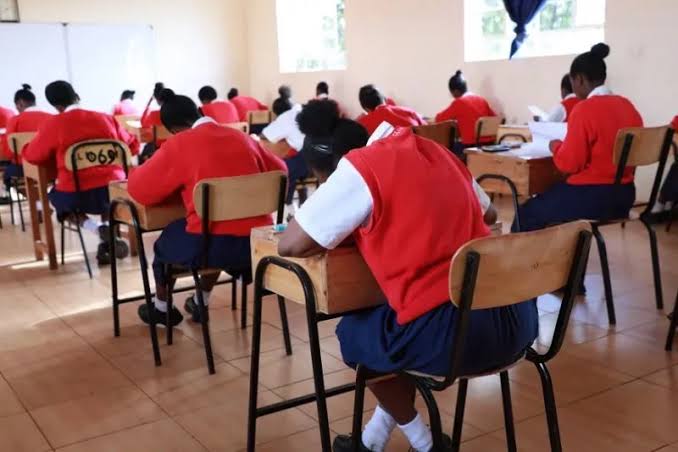
More than 2.58 million learners across Kenya began the 2026 Kenya Primary School Education Assessment (KPSEA) and Kenya Junior School Education Assessment (KJSEA) on Monday, marking a key stage in the implementation of the Competency-Based Education (CBE) system.
Schools across Eldoret city and Uasin Gishu County joined examination centres nationwide as Grade 6 and Grade 9 learners reported for their assessments under measures aimed at protecting the integrity of the exercise.
According to the Kenya National Examinations Council (KNEC), 1,380,463 Grade 6 learners are sitting KPSEA, while 1,206,028 Grade 9 candidates are undertaking KJSEA.
Education Cabinet Secretary Julius Migos Ogamba said 3,634,846 learners were registered for this year’s national assessments and examinations. The figure includes candidates sitting KPSEA and KJSEA, alongside 1,048,355 candidates registered for the Kenya Certificate of Secondary Education (KCSE).
The assessments follow a rehearsal held on Friday, October 23, which familiarised learners with examination procedures ahead of the main exercise.
KPSEA is scheduled to run from Monday, October 26, to Wednesday, October 28, while KJSEA will continue until Friday, October 30.
On the opening day, KPSEA candidates tackled Mathematics and English, while KJSEA learners began with English Language and Composition and Literary Analysis.
The remaining KPSEA papers include Integrated Science, Kiswahili, Creative Arts and Social Studies. KJSEA candidates are scheduled to take subjects including Kiswahili, Mathematics, Integrated Science, Agriculture, Pre-Technical Studies, Social Studies and their respective religious education papers.
Ogamba assured parents and learners that the government had put measures in place to ensure the assessments were administered fairly and efficiently.
He spoke at the Makindu Sub-County Commissioner’s Office in Makueni County, where he witnessed the opening of an examination storage container at 6 a.m. before the distribution of materials to examination centres.
The CS said the government had increased the number of examination storage containers across the country and strengthened security through electronic padlocks, colour-coded assessment materials and personalised question papers.
According to Ogamba, the measures are intended to improve traceability, prevent impersonation and protect the credibility of examination results.
He also clarified that KPSEA and KJSEA centres would not routinely have armed police officers unless the prevailing security situation required their deployment. The approach is intended to avoid creating unnecessary anxiety among younger candidates.
KNEC has deployed nearly 189,000 examination personnel nationwide to oversee the administration of the assessments and examinations.
Ogamba cautioned centre managers, invigilators and parents against individuals claiming to possess leaked examination papers. He urged the public to report suspected examination fraud to the relevant authorities.
In Eldoret city and other parts of Uasin Gishu County, the assessments began amid calls for parents and teachers to support learners throughout the examination period.
Grade 9 candidates are undertaking KJSEA as part of the transition to Senior School under the Competency-Based Education pathway.
The assessments are expected to help determine learners’ progress and inform their placement as they advance through the education system.
Meanwhile, KCSE examinations began on October 19 with oral, practical and low-enrolment papers. The main written examinations are scheduled to run from November 2 to November 20.
Education officials have urged candidates to remain calm, follow examination rules and concentrate on their papers as the national assessment period continues.
 Robert Mutasi