
 By Robert Mutasi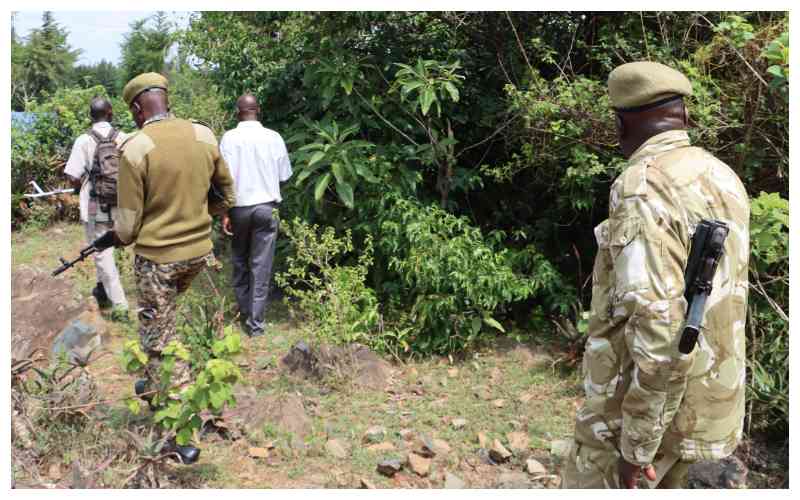
Residents of Randich village in Kapseret, Uasin Gishu County, are calling on the Kenya Wildlife Service (KWS) to capture and relocate a giant python that they say has preyed on livestock and frightened families for more than 20 years.
The reptile, estimated to be about five metres long, is believed to inhabit a rocky, bushy section of a 25-acre property owned by retired farmer Jacob Chelemek.
Chelemek said he discovered the snake shortly after purchasing the land 25 years ago but chose to coexist with it because of his strong belief in wildlife conservation.
“I didn’t want to kill it because of my advocacy for wildlife protection, having worked with an organisation that promotes wildlife conservation,” he said.
For years, the python largely remained out of sight, occasionally emerging to hunt livestock. However, Chelemek said its repeated attacks on chickens, goats, sheep and, in some cases, dogs have heightened fears among residents.
The growing concern has prompted villagers to seek intervention from KWS, saying the snake now poses a risk to both livestock and people.
Residents say the reptile has become bolder in recent months, with reports of frequent sightings near homes and farms, raising fears that it could eventually attack humans.
Following the reports, KWS officers launched a search for the python, combing nearby thickets and rocky terrain in an effort to locate and safely relocate the reptile.
The operation had not succeeded by the time of publication.
Wildlife experts note that pythons are non-venomous snakes that generally avoid human contact and primarily feed on small mammals, birds and reptiles. However, they can attack livestock when natural prey becomes scarce or when human settlements expand into wildlife habitats.
Conservationists emphasize that pythons are protected wildlife under Kenyan law and should not be killed unless there is an immediate threat to human life. They encourage residents to report sightings to wildlife authorities rather than attempting to capture or harm the animals.
Human-wildlife conflict has become increasingly common in parts of Uasin Gishu and other counties as expanding settlements and farming activities overlap with wildlife habitats.
Residents of Randich village say they support conservation efforts but believe relocating the python is the safest solution to protect both the community and the animal.
They have urged KWS to continue the search until the reptile is safely captured and moved to a more suitable habitat away from residential areas.