
 By Robert Mutasi
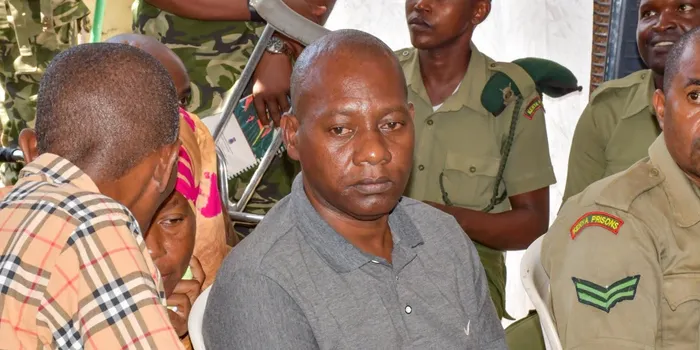
Controversial preacher Paul Nthenge Mackenzie has been sentenced to 200 years in prison following his conviction over the deaths of 191 people, including 190 children, in the Shakahola massacre.
The sentence was delivered by Lady Justice Diana Kavedza Mochache at the High Court in Mombasa on Friday, November 6, 2026, bringing another major development in one of Kenya’s most disturbing criminal cases.
Follow our WHATSAPP CHANNEL for daily updates.
Mackenzie was convicted on 191 counts of murder alongside 28 co-accused after the prosecution successfully presented evidence linking them to the deaths of followers at Shakahola Forest in Kilifi County.
The sentencing followed a judgment delivered on October 19, 2026, when Justice Kavedza ruled that the prosecution had proved its case against all the accused persons beyond reasonable doubt.
In her judgment, the court established that Mackenzie, who led Good News International Ministries, directed his followers to undertake extreme fasting with the belief that they would die and meet Jesus.
The court found that children were targeted first before the practice extended to young people, women and men.
Justice Kavedza further determined that the fasting was not simply a matter of personal religious choice but was enforced through an organised system involving religious indoctrination, intimidation and violence.
The findings highlighted the role of the church’s leadership structure in controlling followers and ensuring compliance with the deadly instructions.
The Shakahola massacre came to national and international attention in April 2023 after authorities began investigating reports of missing people and deaths linked to a religious community operating in Shakahola Forest, near Malindi.
Police investigations led to the discovery of shallow graves containing the remains of people who had reportedly followed Mackenzie’s teachings.
The discoveries triggered a major search and exhumation operation involving multiple government agencies and forensic teams.
More than 400 bodies were eventually recovered from the forest, with the majority of victims believed to have died through starvation.
The tragedy raised serious concerns about religious extremism, the protection of children and the regulation of religious institutions in Kenya.
During the murder trial, the prosecution presented witnesses and evidence to demonstrate how followers were allegedly subjected to extreme religious teachings and practices.
The court heard evidence about the circumstances surrounding the deaths and how individuals who resisted the instructions were subjected to intimidation and violence.
The judge rejected the argument that the followers had simply chosen to fast voluntarily, finding that an organised system had been used to enforce the practice.
The conviction of Mackenzie and his co-accused marked a significant milestone in the prosecution of those linked to the Shakahola deaths.
The latest sentencing now adds another major chapter to the legal proceedings surrounding the tragedy.
The case has also intensified national discussions about religious freedom, accountability among religious leaders and the responsibility of authorities to protect vulnerable members of society.
Further legal proceedings relating to other alleged offences connected to the Shakahola tragedy remain separate from the 191 murder convictions.
 Baraka Simba