
 By Robert Mutasi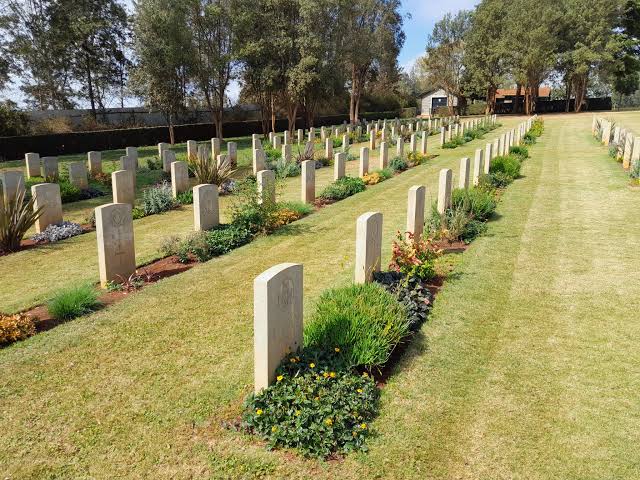
Eldoret’s historic European Cemetery, home to six war graves from the Second World War, is under threat from vandalism, treasure hunting and unchecked development.
Located about three kilometres northeast of Eldoret town centre, off the Eldoret-Iten Road just past Eldoret Prison, the site contains five Commonwealth war graves and one French war grave dating to World War II. Established as a memorial to servicemen who died during the conflict, it is now a shell of its former self.
A Target for Vandals and Treasure Hunters
According to reports by The Standard and People Daily, grave robbers have been targeting the cemetery for items they believe will fetch money on the antiquities market. Tombstones have been defaced, while metallic inscriptions and fittings have disappeared — scrap metal is suspected to be part of the motive.
The threat goes beyond petty vandalism. Investigations have linked grave destruction to a local belief that wealthy colonial-era settlers buried there were interred with valuables.
That belief has fueled a dangerous form of treasure hunting, with gangs digging for antique padlocks, metal boxes and ornaments thought to be gold or silver.
In a recent incident, four suspected treasure hunters were apprehended by members of the public after being found digging into old graves, while three others escaped. One grave had already been opened, leaving skeletal remains exposed.
Encroachment and Development Pressure
Residents warn that residential and commercial construction is slowly surrounding the cemetery, threatening future access.
“This is not something that exists in our community; it is a taboo, the dead must never be disturbed. The graves are very well respected. Let us allow the dead to rest in peace,” resident Wellington Korir said.
The cemetery’s proximity to expanding Eldoret city highlights a wider challenge. As the city grows after attaining city status, heritage sites risk disappearing when development proceeds without protection.
Who Should Protect It?
The condition of the site has raised questions about responsibility. Human rights activist Kimutai Kirui has previously called for the cemetery to be handed to an institution capable of preserving it, such as a university for historical and academic use.
Uasin Gishu County has previously stated it was working with the national government to identify and preserve heritage sites, including the Eldoret war cemetery.
The cemetery is more than a collection of old graves. Its Commonwealth and French burials connect Eldoret to the global history of the Second World War and to international military personnel who died far from home.
Without effective protection, maintenance, and controls on surrounding development, Eldoret could lose one of its most significant landmarks and future generations could lose a tangible connection to that history.
 Eldoret Leo