
 By Robert Mutasi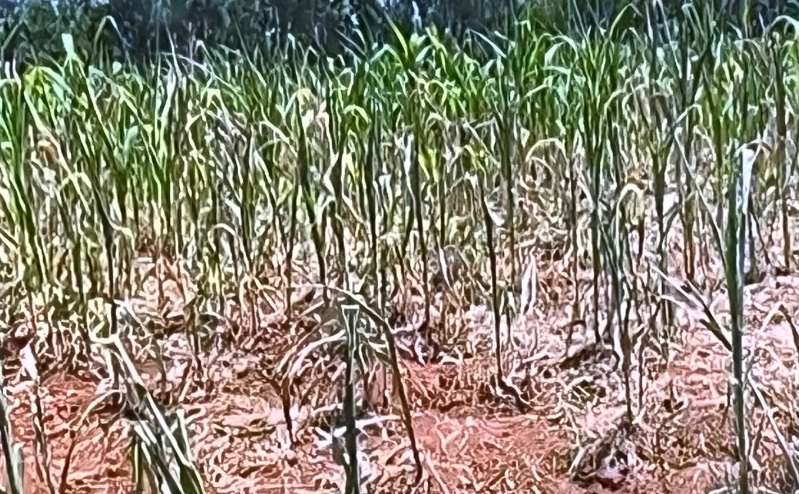
For decades, the vast maize fields of Uasin Gishu, Trans Nzoia, and neighboring North Rift counties have been the backbone of Kenya’s food system. The region produces a significant share of the country’s maize, the staple food consumed by millions of households every day. When rains arrive on time, the green fields stretching across the Rift Valley signal hope for farmers and food security for the nation.
Today, however, that hope is fading.
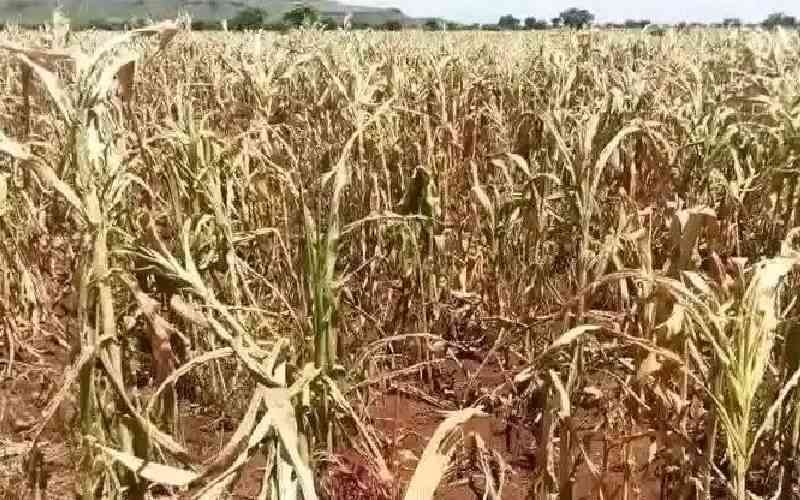
A prolonged dry spell that has gripped Uasin Gishu and other parts of the North Rift has left maize and bean crops withering under intense heat. Farmers who invested heavily in seeds, fertilizer, fuel, and labor are now watching helplessly as crops dry up before maturity.
Agriculture experts warn that the situation could have consequences far beyond the farms of Eldoret, Kitale, and Lugari. If the drought persists, Kenya could face a serious food security challenge in the coming months.
Uasin Gishu and neighboring Trans Nzoia County are often referred to as Kenya’s breadbasket because of their high maize production. Every year, thousands of farmers in the region supply grain to markets across the country.
Maize is Kenya’s most important staple crop. It is used to make ugali, one of the country’s most widely consumed foods, and serves as a key ingredient in animal feeds and various food products.
The current drought has struck at a critical stage of crop development. Most farms are at the top-dressing phase, when maize requires adequate rainfall to absorb nutrients and develop healthy cobs.
Without moisture, fertilizers become ineffective, crop growth stalls, and yields decline sharply.
In Trans Nzoia alone, county officials estimate that about 50,000 acres of maize have already been damaged by the prolonged dry conditions. Similar reports are emerging from Uasin Gishu, Kakamega, and other agricultural zones.
For many farmers, the possibility of harvesting a profitable crop is quickly disappearing.
One of the first consequences of reduced maize production is likely to be an increase in food prices.
When harvest volumes fall, grain supplies entering the market decline. Traders and millers are forced to compete for limited stocks, pushing up maize prices. The increased costs are eventually passed on to consumers through higher prices for maize flour and other food products.
For low-income households already struggling with the rising cost of living, even a small increase in the price of maize flour can significantly affect household budgets.
Economists warn that reduced grain production could also increase Kenya’s reliance on maize imports to bridge supply gaps. While imports can stabilize supplies, they often expose consumers to international market fluctuations and foreign exchange pressures.
The impact of the drought extends beyond crop farming.
Many farmers are already considering converting damaged maize fields into livestock feed. While this may help salvage part of their investment, it signals the loss of grain that would otherwise enter the food market.
Reduced pasture growth and declining water sources also threaten livestock production. Dairy farmers may experience lower milk yields as animals struggle with poor nutrition and heat stress.
The result could be higher prices not only for maize products but also for milk, meat, and other agricultural commodities.
The dry spell is also affecting water resources across the region.
In Eldoret, declining water levels have forced authorities to introduce rationing in several residential areas. Reduced inflows into rivers, reservoirs, and underground water sources are placing pressure on both households and businesses.
Water shortages create additional challenges for farmers who rely on limited irrigation systems. Small-scale vegetable growers, poultry farmers, and dairy producers are among those feeling the effects.
As climate conditions worsen, competition for available water resources may intensify between domestic, industrial, and agricultural users.
Scientists have repeatedly warned that climate change is altering rainfall patterns across East Africa.
Instead of predictable seasons, farmers are increasingly experiencing delayed rains, prolonged droughts, intense storms, and erratic weather conditions. These changes make planning difficult and increase the risk of crop failure.
For a country where the majority of farming remains rain-fed, the consequences are particularly severe.
Agricultural experts argue that Kenya must accelerate investments in climate-smart agriculture, irrigation systems, water harvesting infrastructure, drought-resistant crop varieties, and farmer education.
Without such interventions, droughts like the one currently affecting Uasin Gishu may become more frequent and more destructive.
What is happening today in the maize fields of Uasin Gishu is not merely a local farming problem. It is a warning sign for the entire country.
When Kenya’s breadbasket suffers, consumers in Nairobi, Mombasa, Kisumu, Nakuru, and other towns eventually feel the effects through higher food prices and reduced supplies.
For thousands of farming families, the current season represents a potential financial disaster. For the country, it raises important questions about food security, climate resilience, and the future of agriculture.
As farmers continue to pray for rain, policymakers face growing pressure to develop long-term solutions that can protect Kenya’s food system from increasingly unpredictable weather patterns. The outcome of this season may determine not only the livelihoods of North Rift farmers but also the food security of millions of Kenyans in the months ahead.